Eurostat regional yearbook
- Rural Pact
- Rural Revitalisation Platform
- Stronger Rural Areas
- Connected rural areas
- Resilient rural areas
- Prosperous rural areas
- Demography
- Health and care
- Education and training
- Digital
- Employment
- Entrepreneurship
- Tourism and heritage
- Transport and mobility
- Agriculture and food
- Nature and environment
- Research and innovation
The Eurostat regional yearbook is an annual flagship publication providing a detailed statistical picture of the regions of the EU, alongside regions in EFTA and candidate countries. Regional statistics have formed part of Eurostat’s work for more than 50 years, allowing users to look beyond national averages and examine the considerable demographic, social, economic and environmental differences between territories.
Access the resource
Author: Eurostat, European Commission
Publication: 2016 - ongoing
Each edition brings together harmonised regional indicators across a broad range of themes. The latest edition covers population, health, education and training, labour market, living conditions, digital society, economy, business, research and development, tourism, transport, environment and agriculture. Chapters combine maps, figures and infographics with descriptive analysis highlighting key territorial patterns and disparities.
The yearbook is available in several complementary formats. Its chapters are published online through Statistics Explained and updated or replaced annually. Maps from the yearbook can be explored through Eurostat’s Statistical Atlas, allowing users to zoom in and examine individual regions. An accompanying annual Regions in Europe interactive publication presents selected regional statistics through dynamic visualisations and short explanatory texts, making the data more accessible to a broad audience.
While the subjects covered remain broadly consistent, each edition can give additional attention to topical policy issues. For example, the 2023 edition highlighted skills, education and labour markets in the context of the European Year of Skills. The annual format therefore provides both a recurring overview of regional conditions and evidence on emerging territorial trends.
Why it is useful for rural areas
Although the yearbook is not exclusively focused on rural areas, its regional perspective makes it valuable for understanding the diversity of rural and predominantly rural territories and how their conditions compare with other EU regions. It provides evidence across many issues central to rural development, from population change, health and education to employment, digitalisation, transport, agriculture, tourism and environmental conditions.
The maps and regional indicators can help identify territorial disparities that national-level statistics may conceal, providing an evidence base for place-based policymaking, territorial analysis and monitoring. The Statistical Atlas is particularly useful for rural stakeholders seeking to examine data for individual regions and compare them with other territories.
Who is this resource for?
The yearbook is relevant for EU, national, regional and local policymakers; rural and regional development practitioners; researchers and students; statistical authorities; rural networks; civil society organisations; and other stakeholders seeking comparable evidence on social, economic and environmental conditions across European regions.
About the organisation
Eurostat is the statistical office of the European Union. It provides high-quality statistics and data on Europe in cooperation with national statistical authorities, supporting comparisons between countries and regions and evidence-based EU policymaking.
News

New Good Practice Brochure spotlights inspiring examples of territorial development
A new edition of our Good Practice Brochure highlights six diverse initiatives that show how territorial development instruments and approaches can help improve quality of life in rural areas.
- Rural Pact
- Rural Revitalisation Platform

Strong villages and towns in Europe: insights from the EU Rural Observatory
New EU Rural Observatory research examines population change across Europe’s rural and urban settlements and identifies the characteristics associated with growth, pinpointing potential areas for targeted local policies.
- Rural Pact
- Rural Revitalisation Platform

Horizon Europe project develops interactive dashboard for policymakers and planners
A new interactive tool from the PREMIUM_EU project helps translate information on demographic change and migration, regional development and policy into inspiration for policymakers, planners and regional strategies.
- Rural Pact
- Rural Revitalisation Platform
Good Practices

A hub for digital nomads on the Black Sea coast in rural Bulgaria
- Rural Pact
- Rural Revitalisation Platform

Holapueblo: connecting people with rural municipalities to revitalise depopulated areas in Spain
- Rural Pact
- Rural Revitalisation Platform

Senior housing on Venø Island: enabling generational renewal through adapted housing solutions in rural Denmark
- Rural Pact
- Rural Revitalisation Platform
Publications
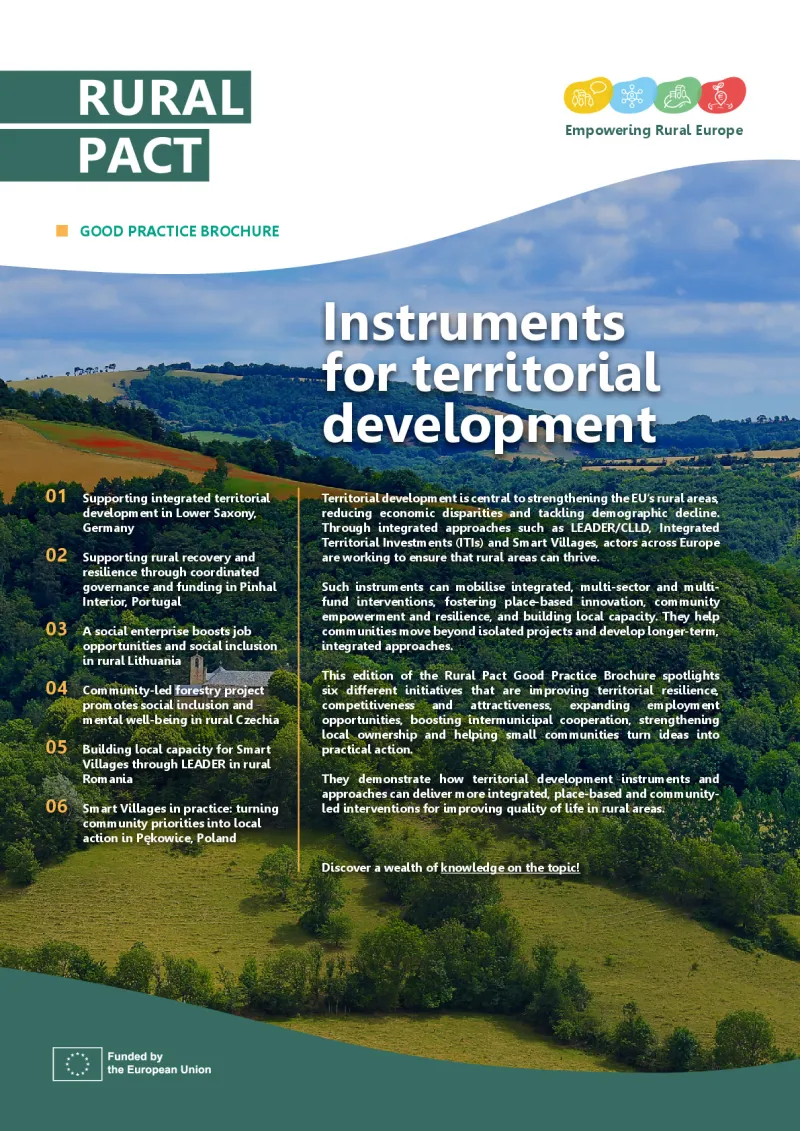
Good Practice Brochure 'Instruments for territorial development'
The third edition of the Rural Pact Good Practice Brochure focuses on territorial development. It highlights how integrated approaches like LEADER/CLLD, Integrated Territorial Investments (ITIs) and Smart Villages can help improve quality of life in rural areas.
- Rural Pact
- Rural Revitalisation Platform
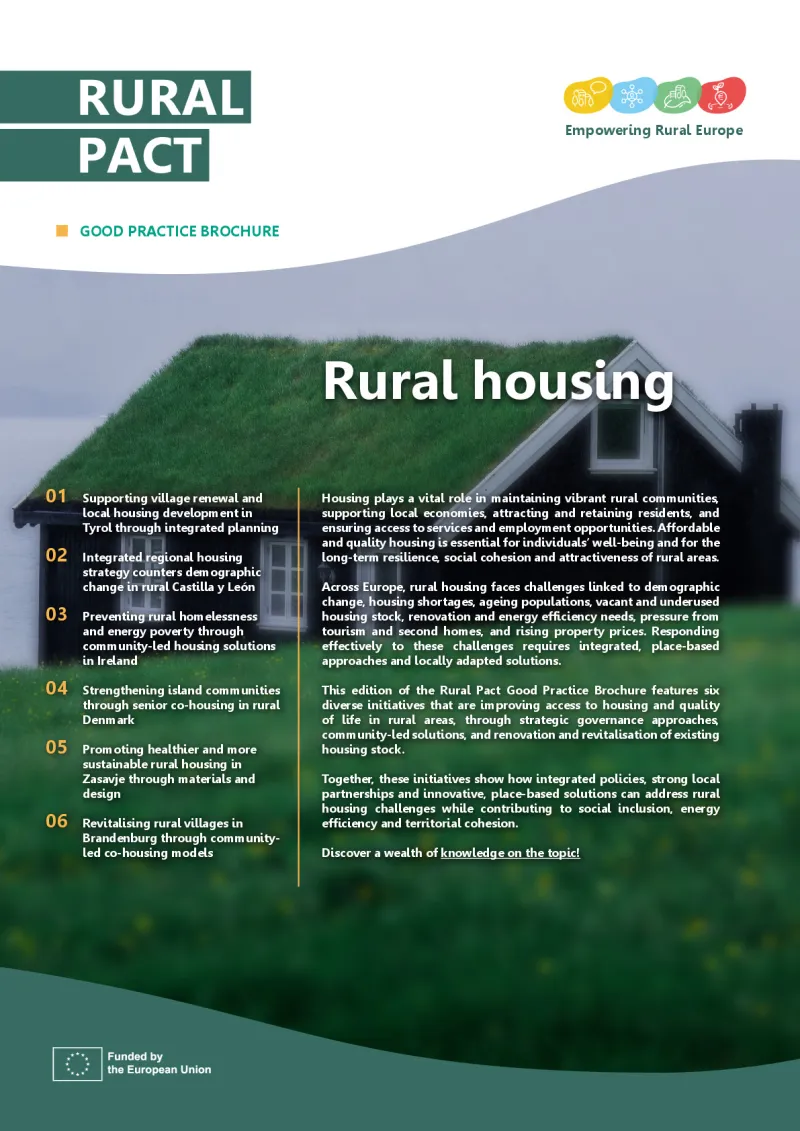
Good Practice Brochure ‘Rural housing’
The second edition of the Rural Pact Good Practice Brochure explores how integrated policies, strong local partnerships and place-based solutions can address rural housing challenges while contributing to social inclusion, energy efficiency and territorial cohesion.
- Rural Pact
- Rural Revitalisation Platform

Rural Vision Magazine | Edition 3
The third edition of the Rural Vision Magazine features a range of stakeholder voices on the most pressing developments around the EU rural vision and Pact in 2025.
- Rural Pact
- Rural Revitalisation Platform