-

-
CEST
- English
- Thon Hotel EU - Brussels, Belgium
- In-person
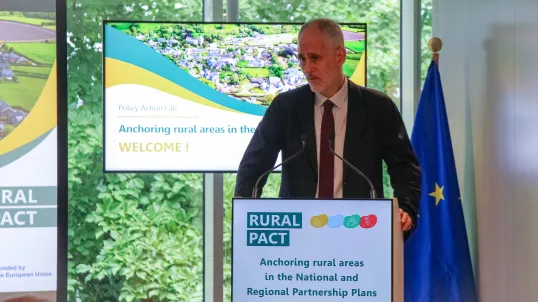
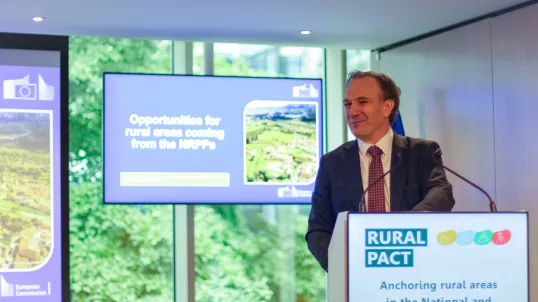
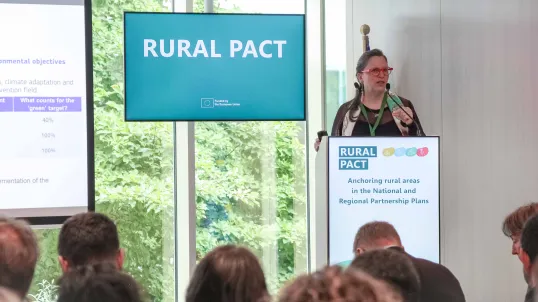
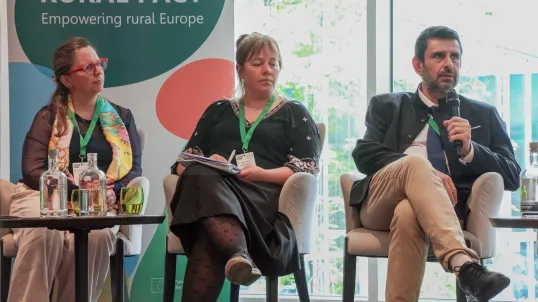
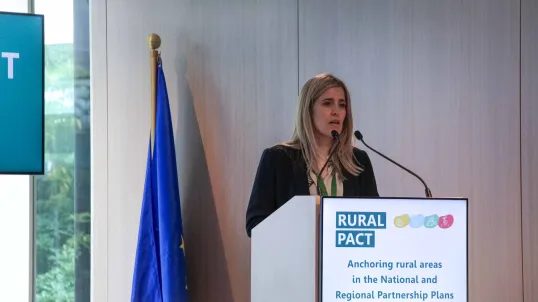
This Policy Action Lab, organised by the Rural Pact Support Office, enhanced the knowledge of the Rural Pact Community about three building blocks relevant for rural communities and territories in the National and Regional Partnership Plans (NRPPs) proposed for the 2028-2034 EU budget.
As the 2028-2034 funding period approaches, the Member State institutions responsible for designing the future National and Regional Partnership Plans (NRPPs) are reflecting on how to make best use of their resources and of the time available to both develop and negotiate the Plans. They are also reflecting on or have already started to build the partnership of authorities and organisations that should take part in the design, implementation and monitoring of the future plans. This is a good moment to discuss how the plans could best answer rural challenges in the diversity of European contexts and how the partnership principle could be effectively applied to involve rural authorities and representatives.
The European Commission’s legislative proposals for the 2028-2034 EU budget published on 16 July 2025 bring significant changes regarding EU funding. An important change is the merging of funding instruments and policies under shared management with Member States, including rural development policy, under one National and Regional Partnership Plan per Member State, funded through a single fund.
This new fund – the European Fund for economic, social and territorial cohesion, agriculture and rural, fisheries and maritime, prosperity and security – is intended to improve synergies and complementarities between policy domains and promote a more integrated approach to rural action across sectors and governance levels to address complex needs in rural areas.
While the Commission proposals are under negotiation with the Council of the EU and the European Parliament, the national and regional authorities, involving local actors, need to consider how to devise the plans that would allow for the most efficient use of the resources available to support rural territories, including the 10% rural target that has been proposed to support a consistent agenda of measures in these territories.
The Policy Action Lab provided a space to build capacities and exchange on how rural areas challenges and opportunities can be tackled in the NRPPs: the opportunities for policymakers can mobilise with examples of integrated measures; which engagement mechanisms can be used to best involve rural authorities and representatives in the development of the Plans; and how performance measurement and territorial coding will work in practice.
Objectives
- To build the capacity of the Rural Pact Community members – in particular policymakers at national and/or regional levels and rural community members – on the diversity of measures that could support rural communities within the National and Regional Partnership Plans (NRPPs);
- To reflect and draw recommendations on how rural actors and communities could best be involved in the planning and preparation of the Plans at national and/or regional levels, in line with the partnership principle;
- To build a better understanding of the proposed provisions for monitoring and tracking expenditure in the performance framework, including territorial coding.
The Policy Lab endeavours to ensure that the participants have a clear idea of how the NRPPs can be operationalised to the benefit of rural communities.
Videos
- Welcome and introduction to the day
- Targeted measures to address diverse rural needs
- Measures to improving living standards and address territorial disparities
- Tracking and monitoring support for rural areas
- Engaging rural stakeholders in the NRPP design and implementation
- Report back from the interactive session and closing remarks
Target audience
The target audience consists of policymakers at national and regional levels involved in the design of the National and Regional Partnership Plans, as well as stakeholders representing rural communities.
Programme
Agenda
(PDF – 258.28 KB)
Additional info
Venue
Thon Hotel EU
Rue la Loi, 75 Brussels Belgium
Media